Getting a Little Squirrelly

How many times has this happened to you: you’re driving home after a day in the forest, rounding those winding corners with the expertise of a seasoned mountain driver, when suddenly a panicked squirrel has decided that the best way to avoid your oncoming vehicle is to run across the road right in front of you. Perhaps you slam on your brakes, swerve your car, or grip the steering wheel with white knuckles, while cringing in dreadful anticipation of the telltale bump that reveals that critters unfortunate fate. Looking back in your rear-view mirror you see that this time the lucky squirrel has been given a second (or perhaps twentieth) chance, and you sigh in relief while muttering a few choice words concerning the apparent death wish of certain rodents.

Does this sound familiar? There are few who drive in the hills and mountains of the Sierra Nevada who could say that they have not been subjected to a similar scenario many times before, if not daily. This year I decided to take advantage of these up close and personal wildlife experiences to expand my ability to recognize the types of squirrels that are most common within our mountainous area. I was definitely surprised at the diversity in squirrel species I uncovered after just a little research. Below I have put together a brief description of some of the more common and/or interesting types of squirrels that can be found through many areas in the mountains for your enjoyment and learning pleasure- hopefully you too will improve in your drive-by wildlife identification skills!

Western Gray Squirrel

western_gray.jpg

A large and charismatic tree dweller, the Western Gray Squirrel spends its days busily eating and collecting food off of the forest floor. Soft gray hair and a large bushy tail is the key to recognizing this species. In late summer eating becomes especially intense for the Gray Squirrel as they try and fatten up in preparation for the reduced supply of food the wintertime provides, especially since (like most tree squirrels) they do not hibernate. They prefer to nest in a hollow tree but will build a nest in tree branches if no hollow is available.


Douglas (Chickaree) Squirrel

douglas_squirrel.jpg

If you have ever been walking through the forest and suddenly found yourself the subject of a thorough and lengthy scolding by a squirrel from a tree branch above, the chances are that you have encountered the Douglas Squirrel- one of the most talkative, territorial, and interesting characters of all the squirrel species. Much smaller than the Western Gray, they can also be distinguished by their summer coat that is gray on top and orange on the belly. Douglas Squirrels are active all year and they are very busy in the daytime climbing pine and fir trees, cutting off cones which they either take to their “midden” (their chosen spot to peel the cones and eat the seeds), or carry off to be stored underground for later use. Many researchers believe that Douglas squirrels depend on a mature or old growth forest for habitat.

Northern Flying Squirrel

northflyingsquirre.jpg

Okay, so the chances of you seeing one these guys (let alone hitting it with your car) is pretty darn slim. But they have to be included, after all, they are flying squirrels! One of only two flying squirrel species found in North America, the Northern Flying Squirrel is plentiful in numbers throughout the mid mountain elevations of the Sierra Nevada. We just don’t see them because: a) they are nocturnal (only come out at night), and b) they are arboreal (live strictly in the trees). These little guys are very cool as they have large flaps of skin that stretch between the rear and the front leg that allows them to “fly” (actually glide) from tree to tree with distances averaging from 5 to 25 meters in distance per flight! Their diet is largely composed of lichen and fungi, but they also eat a variety of other food including berries, nuts, tree sap, and eggs. If you’d like to see them fly, check out this cool video from flyingsquirrels.com.

California Ground Squirrel

ca-ground-squirrel.jpg

This common ground squirrel is found up to 10,000 feet in elevation and is one that is frequently witnessed (and dodged) by drivers whizzing down the highway. Similar to a gray squirrel in appearance, its tail is less bushy and prominent. The upper side of the squirrel is gray to brown with mottled spots on its coat, and the underbelly is a lighter brown to yellow in color. The California Ground Squirrel builds an intricate network of tunnels underground which it sometimes shares with others of it’s species, and here they store food and live, rarely straying far from their den. Like most ground squirrels they are dormant in the wintertime and enter a semi or full state of hibernation depending on the intensity of the winter. They have a diverse range of food they enjoy from fresh greens, to seeds and acorn, eggs, and even road kill.

Golden-mantled Ground Squirrel

gold_mantled_ground.jpg

This ground squirrel is commonly mistaken to be a chipmunk, but can easily be identified once you know that the Golden-Mantled Ground Squirrel has stripes that run up the length of its body and stop at the shoulders, but chipmunks’ stripes extend all the way to their ears. This squirrel can be found in forests throughout North America, and enjoys a diverse diet of food including berries, acorns, pine nuts, scavenged meat, flowers, and fungi. They are also similar to chipmunks in that they store large amounts of food in their cheeks (which allows them to be able to run on all four feet at full speed while carrying food), which they take back to their den and store there for later use.

Yellow-bellied Marmot

yellow_bellied_marmot.jpg

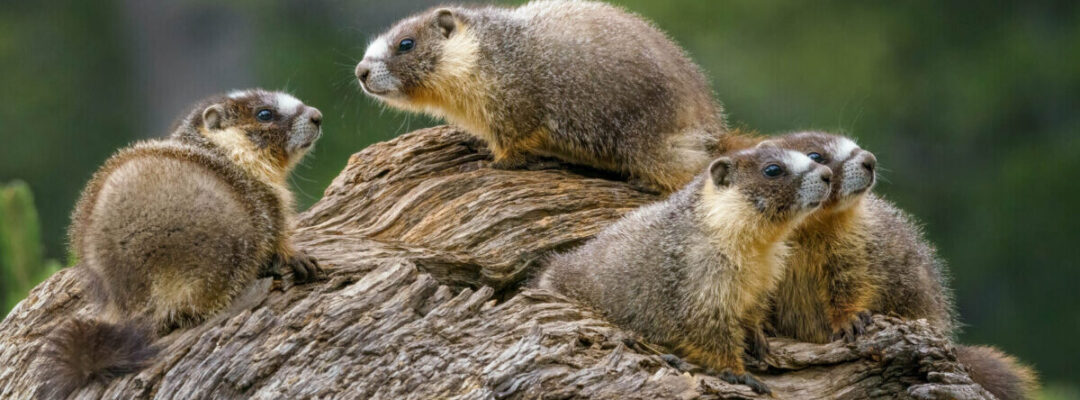
You may be surprised to learn that the marmot is actually a member of the squirrel family. Since they are one of my favorite animals of the Sierra Nevada, I couldn’t pass up this opportunity to learn a little more about them The Yellow-bellied Marmot is less likely to end up as an obstacle course on the road, but if you are out exploring above 7,000 feet elevation in the summer, it is quite likely that you will hear their high pitched whistle that alerts other marmots and animals to your oncoming presence. These roly poly rodents are about the size of a ground hog, and are often caught basking on a rock in the mid day sun. Their den is usually beneath a rock slide or rock ledges as this makes them more difficult to find by predators looking for a marmot dinner. Simply put, these guys are CUTE! If you want to read a funny news article about a hitchhiking marmot, click here for a laugh.

After I concluded my research for this blog, I saw there were many things that all of these squirrels have in common: their habit of collecting and redistributing food is an important way that trees and other plants get their seeds replanted and spread. Squirrels are also a very important a source of food for larger predators from birds of prey like the Northern Goshawk, or the American Marten, and felines like the bobcat and mountain lion. It emphasized to me how important the roles are that each type of animal plays in the forest ecosystem.

Now when I clutch the steering wheel with my heart jumping into my throat as I witness another foolhardy squirrel risking a potential encounter with the bottom of my tires, instead of venting to my fellow human passengers on how idiotic that squirrel’s survival instincts are, I will instead proudly announce what species of squirrel it was that almost made me drive off the road. I am sure they will be as grateful as I am to know this valuable information and look forward to another incident that will allow them learn another new and interesting species.

Do you have any interesting squirrelly stories or thoughts? Share them here!

(Sources for this article: “Discovering Sierra Mammals” by Russell K. Grater, Yosemite Association, 1978; www.flyingsquirrels.com; www.wikipedia.org; and San Diego 6 News, www.sandiego6.com)

Julia Stephens, CSERC associate


Leave a Reply

XHTML: You can use these tags: <a href="" title=""> <abbr title=""> <acronym title=""> <b> <blockquote cite=""> <cite> <code> <del datetime=""> <em> <i> <q cite=""> <strike> <strong>