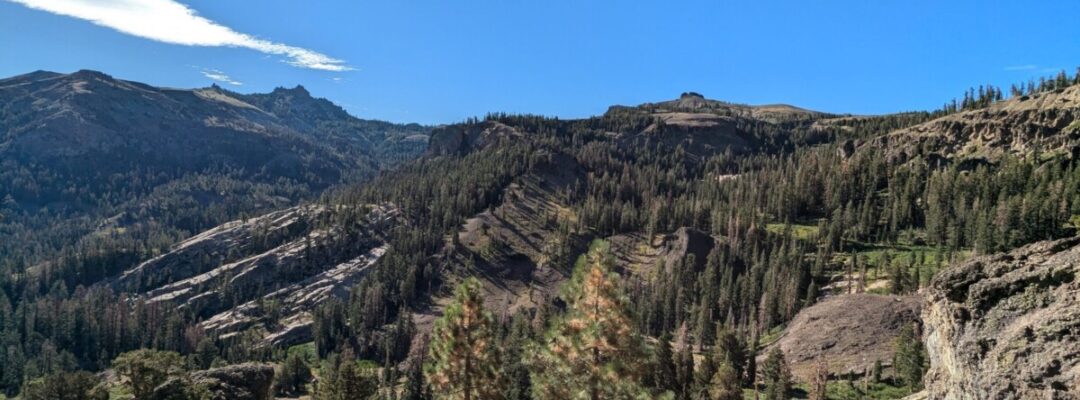
I find it interesting that Tuolumne County offers so much in scenic beauty and natural value, and yet remains a relatively unknown region of the Sierra Nevada. Whenever I try to describe where I live to someone from out of town, it seems like 7 out of 10 times the person has never heard of Tuolumne County, and even more so if the person is from out of state. I must admit, I am relatively new to this region, having moved here just over three years ago, but now that I live here I find it hard to imagine living anywhere else. SO… as a patriot to my beautiful region, I thought that I would present a short list that can be used the next time someone is trying to tell a friend what is so great about being from Tuolumne County… from the perspective of a lover of the outdoors!
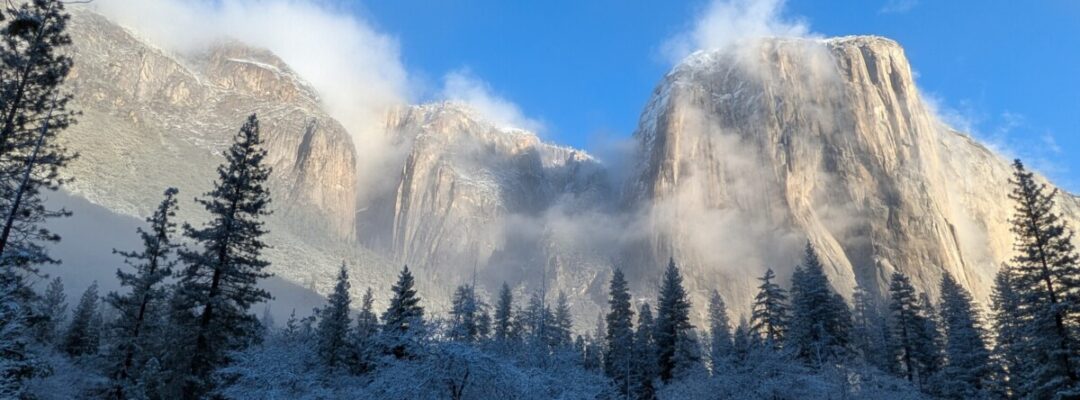
1. A significant portion of Yosemite National Park, one of the crown jewels of the Sierra Nevada (including the Grand Canyon of the Tuolumne River above Hetch Hechy reservoir) is located within our county.

Grand Canyon of the Tuolumne River
2. The Sierra Nevada and especially Yosemite were the source of inspiration for the famous preservationist/naturalist John Muir, who wrote: “…in the face of Yosemite scenery cautious remonstrance is vain; under its spell one’s body seems to go where it likes with a will over which we seem to have scarce any control.” as written in his book My First Summer in the Sierra.
3. Traveler of the western frontier and author Mark Twain spent the winter in a cabin outside of the Tuolumne County town of Columbia in 1864, after being inspired to do so by his mentor, Brett Harte. Twain spent his time in his region writing and mining for gold, and this is where he wrote his first short story to bring him to notoriety, “The Celebrated Jumping Frog of Calaveras County”.
4. Giant Sequoias! The south grove of Calaveras Big Trees State Park lies within the Tuolumne County border. This grove features truly gigantic and spectacular trees, a rushing river, and excellent hiking.
5. Historic Sonora Pass: It is now a beautiful winding highway connecting the west side of the Sierra Nevada to the east side of the Sierra Nevada, but was originally a challenging route taken by west-bound wagon trains in the mid 1800’s to access the prospering gold mining towns of Sonora and Columbia. In the summertime this highway serves as easy access to the granitic high country of the Sierra Nevada with waterfalls and amazing scenery. As the season turns to fall, cottonwood and aspen trees along upper sections of this route turn vibrant shades of yellow, orange, and red.

Tuolumne County high country in the fall.
6. Our rich heritage: Either a Me-wok or Yokuti tribe called “Tawalimni” that once resided along the Stanislaus and Tuolumne River in this region is thought to be what the origin of our namesake “Tuolumne”. Evidence of their time here can be found by hikers in the woods, where ancient “grinding holes” remain engraved in granite along stream and river banks as well as lakes.

Grinding holes were used by many tribes in this region to make flour from acorns.
7. Bennett Juniper: The world’s largest and oldest Western Juniper tree, approximately 4,000 years old and over 40 feet in diameter, located in the high country of our Stanislaus National Forest.

The Bennett Juniper tree can be accessed off of the high country Eagle Meadow road, a 30 minnute drive off the main highway.
7. Emigrant Wilderness and Carson Iceberg Wilderness: Located in our amazing alpine region of the Sierra Nevada. Granite domes, scenic lakes, and relatively low numbers of visitors make these wilderness regions ideal for backcountry hikers, kayakers, fishing folks, climbers, skiers/snowboarders, and nature lovers alike.

Backpacking in the Carson-Iceberg Wilderness last summer with my co-worker Heather.
8. And of course, wildflowers. It’s a little early to think about them, but anyone who has spent a spring or summer in this region knows that you can follow the diverse fields of wildflowers up from the foothills to the high country as the season progresses.

Owl Clover and company in the Sierra foothills. Photo by James Kelly.
Remember that this is my short list. What would you change or add? Let us know by commenting on this blog!
Julia Stephens
CSERC Environmental Associate