Slaughter of Bears by Cars Continues in Yosemite

Published on Tuesday, July 29th, 2008

It seems a tragedy that as millions of people come to visit the wild beauty of Yosemite National Park each year, many black bears succumb to the fate of being killed by cars or trucks driven by nature-loving visitors. Just this year alone, 13 black bears have already been killed by vehicles in Yosemite Park.


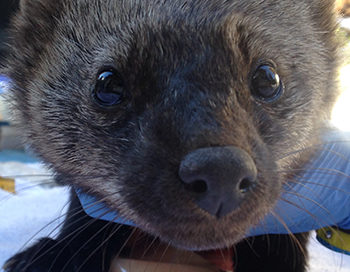
Black Bear cub

In order to make people more aware of the need to slow down while driving on Park roads, Yosemite rangers post signs at each location where a bear was killed by a vehicle. But despite years of publicity and the “red bear = dead bear” program to alert the public to bear deaths, the slaughter continues. …and although bears get a high level of attention, it’s obvious that lots of other wildlife also gets nailed as animals freeze in headlights or move too slowly to evade cars.


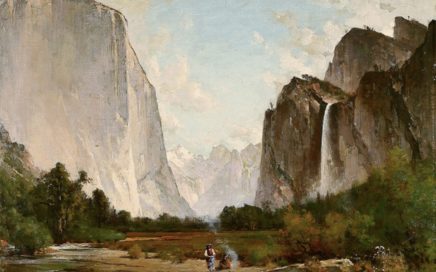
Yosemite Valley


Busy road-way in Yosemite Valley


North Dome


Bridalveil Fall

Can you (or others who you share this with) think of ways to help reduce bear deaths from vehicle traffic in this magical park?

Other common clashes between people and bears occur frequently at campgrounds and backcountry campsites where some bears become accustomed to scavenging for food that is stored improperly by people. If a bear becomes too accustomed to human food, a bear may have to be put down. While the Park staff goes out of its way to avoid killing problem bears, careless food storage by not-so-bright Park visitors can ultimately lead to the Park staff having no other choice. Frequently-fed bears gradually lose their fear of people and can pose unacceptable risk to public safety.


Black Bear caught on camera at one of CSERC’s photo detection stations

What do you think about these clashes between people and black bears? How can a balance be found between the enjoyment of the beauty of a place like Yosemite and the protection of the wildlife that depend on these places for survival?


Trekking Along the Emigrant & Yosemite Wilderness Boundary

Published on Thursday, July 10th, 2008

A couple weeks ago, while fires burned down below filling the sky with smoke, I went on a 38-mile trek along the Emigrant and Yosemite Wilderness boundary with Tom Hofstra, Steve Leach, and Dave Cornman. Like most of the CSERC staff, I love getting out and exploring this beautiful area as much as I can.

The hike began amidst the burnt region of Kibbie Ridge behind Cherry Lake scrambling over dozens of fallen logs that the trail crews had yet to get to. Surprisingly, however, in many spots, not all the trees had burned and the ground was bursting forth with the abundance of many wildflowers, shrubs, and other plant species. It was a great reminder that although fire kills, it can also bring forth new life.


Lewis’s Monkeyflower found on Kibbie Ridge


Heather hiking along Kibbie Ridge

Eager to know what lay beyond, the following day, we hiked over Styx Pass into the breathtaking, glacially polished Cherry Creek Canyon. This same trail is often frequented by kayakers carrying 100 pounds of gear seeking out the world famous Cherry Creek route. I was astonished to hear later of the waterfalls along the route that might seem like a death trap to the average person!


Cherry Creek Canyon from Styx Pass


Chatter marks on glacially polished granite


Hiking along granite in Cherry Creek Canyon

Part of our hike into the Canyon included going over the surging waters of Cherry Creek. Crossing over the fast moving area pictured below (being as small as I am) I would have slipped without the help of Tom. Surprisingly, however, Cherry Creek often dries up entirely by the end of the summer. The water was very cool, clean, and refreshing though, as we ended up stopping to eat lunch on the other side.


Steve crossing rushing waters of Cherry Creek

Hiking down near Huckleberry Lake, which stretches on for miles, the mosquitoes slowly became horrendous. As we walked quickly, we each carried our own cloud of insects seeking to poke at us. This is quite common in the wilderness near the end of June, but later in the season, Huckleberry Lake looks like it would be a wonderful place to swim!


Huckleberry Lake

Our final destination was camping in the midst of Sachse Monument where I was in my tent for much of the evening to avoid getting eaten up. It felt great to finally look out and see dozens of mosquitoes trying to poke my tent instead of me. It was also a great feeling to be in the peace and quiet of the wilderness.


Tom with a Mosquito net on in the foreground of Sachse Monument

Our last night, we hiked backed out and camped on the ridge of Cherry Creek Canyon near Boundary Lake. The views from our campsite were spectacular and reminded me why this spectacular region of the Sierra Nevada has touched me so much.


Heather, Dave, and Steve on ridge near Boundary Lake


Boundary Lake


Sunset at the campsite


Beautiful, white granite at sunrise

Walking back on the last day, my feet were killing me or rather “the dogs were barking” but it was an awesome trip. I’d recommend it to anyone who likes backpacking, only that it would be best to go later in the season so as to avoid the mosquitoes and get to swim in some of the gorgeous lakes!

-Heather Campbell, CSERC Staff member

What trips have you gone on or are you planning this year? Please share!

To comment, just click on the comment button below and fill out the form. No registration is required.


Update on CSERC’s Painted Frog

Published on Monday, June 23rd, 2008

Bob just finished his painted frog and it will arrive at the SNAC in Murphys hopefully this week. Here are a few pictures of the final product, and I can only imagine how spectacular this shading and texture must be in person.


CSERC Members Practice What They Preach!

Published on Thursday, June 12th, 2008

So far, our blogs have focused on the efforts and interests of CSERC. In this blog however, we’d like to focus on the accomplishments and actions of our CSERC members who bring the local environment into their daily lifestyle. Recently, two of our CSERC members, Tracy Knopf and Bob Carabas approached us with an interesting and engaging fundraising idea. Every year, Calaveras County Chamber of Commerce has the Painted Frogs of Calaveras County fundraiser. It works like this. A local Calaveras County business sponsors the cost (including artist fee) for an enormous three-foot tall frog. A local artist paints or decorates the frog in any style, and then the frog is displayed in front of the sponsor business until October. The business gets the benefit of being “put on the map”—Chamber of Commerce publishes a tourist map with all the frog locations in the County displayed. In October, there is a big benefit where the frogs are auctioned off and the proceeds go to a designated charity.

Tracy Knopf, a loyal CSERC member and volunteer for many years, is an amazing mosaic artist. She collects old dishes, teacups, and glasses from yard sales and thrift stores, broken bottles, old hubcaps, and other supposed “junk” and turns this junk into beautiful mosaic stepping stones, mirrors, and yard art. Tracy has truly perfected the system of recycling! Tracy’s most recent creation is a mosaic Painted Frog of Calaveras County modeled after the native and threatened California red-legged frog. We first discovered her idea about this creation when she came to our Center looking for an image of a red-legged frog to model her mosaic. A Calaveras County optometrist sponsored her and she spent a month creating her mosaic frog for the October auction. You can visit her frog on display at Chatom Vineyards and the proceeds of the auction will benefit Bret Harte High School in Calaveras County.


Hubcap by Tracy Knopf


Painted Frog by Tracy Knopf

When Tracy found out that there remained one unpainted frog yet to be sponsored and decorated, she talked to another of our CSERC members who is also an artist, Bob Carabas. Bob is an abstract artist, using both acrylic and oil paints on canvas, and easily agreed to paint a frog to benefit CSERC. Bob and his wife Leslie, also a remarkable textile artist, are incredibly generous members of CSERC, and in addition to painting the Calaveras frog, have also donated the artist fee for this project, and donated even more money to help sponsor the frog.

Hubcap by Tracy Knopf
Bob and Leslie Carabas with unpainted frog


Central Valley by Leslie Carabas


Fantasy by Leslie Carabas


Children of War by Bob Carabas


6×6 Yellow by Bob Carabas

Bob and Leslie take their love of the aesthetic even beyond their work and into their home. I visited their home and studios on the Art Trails exhibit, and explored not only their artwork but also their beautiful strawbale home. Bob and Leslie have perfectly demonstrated that a sustainable home can also be gorgeous. Their strawbale home is so well insulated, that on the 95 degree day that I visited (during our May heatwave) it was a maximum of 75 degrees inside (no air conditioner!). The concrete floor also helps with the cooling. During the winter, the strawbale insulation is also perfect for keeping in the heat. With the adobe plastered on top of the strawbales, the house has lovely rounded corners. In addition to the house itself, Bob and Leslie are also installing solar panels for electricity, and a 9,000-gallon cistern to collect rainwater from the roof to water their bright and beautiful native landscaping. Bob designed and helped build this house himself and also designed another 6 strawbale homes in Tuolumne County.


Kitchen in Bob and Leslie’s strawbale home


Bob’s studio

The Sierra Nevada Adventure Co. (SNAC), owned by CSERC members Tonja Peterson, and Jill and Shawn Seale will also be sponsoring our painted frog, and the frog will be on display at their new store in Murphys. SNAC is a wonderful local business with stores in Sonora, Arnold and now Murphys that provides top quality outdoor gear and also does their part to promote respect for the environment, in part by supporting organizations like us. Check it out if you get a chance, and if you really fall in love with the frog, make a bid at the auction in October!


SNAC’s new store in Murphys

-Brenda Whited, Staff biologist

Are you or someone you know a person who brings the natural environment around you into your daily lifestyle? Show and tell us!


Wolverine Sightings in the Sierra Nevada Causes Excitement in the Science Community

Published on Monday, May 12th, 2008

For years, CSERC biologists have maintained camera detection wildlife stations in the Stanislaus National Forest in search of elusive forest furbearers including martens, fishers and wolverines. While we have detected the adorable pine marten throughout the forest (see picture below), we have yet to get photographic evidence of fisher or wolverine. Wolverine, as many of you may have heard, has been spotlighted in the media recently. This elusive carnivore, thought to be extinct in the Sierra Nevada, was recently photographed on the Tahoe National Forest. Oregon State University graduate student, Katie Moriarty, first photographed this furry blur (see picture below) on February 28, and Forest Service researchers later photographed wolverine and collected hair and scat samples on March 13. These researchers analyzed DNA collected from the scat samples and compared this DNA with samples from museum specimens of the historical California population as well as with animals from Washington and the Rocky Mountain Range. Unfortunately, this DNA evidence indicates this wolverine did not descend from the California or Washington populations but is related to the Rocky Mountain population. The nearest wolverines in the Rockies exist 600 miles away northeast in the Idaho Sawtooth Range. So either this animal has broken records in the greatest distance traveled by a wolverine or it is a released or escaped pet or captive. Either way, we continue our search for fisher and wolverine in the Stanislaus in hopes of capturing the image of one of these creatures. Share with us any interesting wildlife sightings that you’ve had in the forest!

Brenda Whited, CSERC Staff Biologist

martenblog.jpg
The Pine Marten is one rare mammal that our camera stations have been successful in capturing.

wolverine_blog.jpg
Here is the now famous photo that first caught the Tahoe wolverine on camera.


CSERC’s volunteer day in the Red Hills was a huge success!

Published on Monday, April 28th, 2008

This weekend, the staff at CSERC and close to 20 volunteers gathered at the Red Hills on Saturday morning. The mission: to work with Mark Pertersen of the BLM on cleaning up several locations that have been used as a shooting range over the years. As many residents of this area know, this is an ecologically sensitive area due to the Serpentine soil that defines the Red Hills. The unique qualitites of this soil allows limited, often rare types of vegetation to successfully take root. The creeks that run through this area even have a fish known as the Red Hills Roach that is endemic to this spot alone! Needless to say, the continued use of this special location as a shooting range has been compromising the delicate diversity of the Red Hills. By picking up the accumulated waste and posting new signs, CSERC and the BLM wants the Red Hills not to be identified as a place that is acceptable for use as a shooting range. Washing machines, scrap metal, refrigerators, thousands of bullet shells, and more were gathered by our trusty workers, loaded into their pickup trucks, and taken to Waste Management for proper disposal. The weather was great and spirits were high, and by the time the volunteer crew was done the locations targeted looked much more like the natural environment that should be there. Check out these pictures to get an idea of what we accomplished!

before1.jpg
What a mess!

before21.jpg
Getting started.

shell_pile.jpg
A sampling of the trash that our volunteer’s collected.

working_hard.jpg
Hard at work!

frank1.jpg
Gathering the thousand of bullet shells was tedious but unavoidable. Thank goodness for folks like Frank who are willing to do what has to be done!

bullet_shells1.jpg
A small portion of the bags of shells we gathered.

loaded1.jpg
Our trucks were loaded down!

after1.jpg
A job well done!

happy_volunteers2.jpg
Happy volunteers. Thanks for your help!

-the staff at CSERC
Do you have any suggestions for potential environmental volunteer projects that CSERC could organize? Post them here!


Welcome to the new CSERC blog!

Published on Monday, April 14th, 2008

Hello! The staff at CSERC has created this blog in order to be able to interact with the large community of people who care about the Sierra Nevada region and what CSERC does to protect it’s diverse ecosystem. We want this to be a place where we can be a little less formal and discuss issues, concerns, and things that inspire us about this area. Please stop in to our blog and say hello, provide us with feedback, or share your personal Sierra Nevada stories with us! We are excited to having a new avenue of communication with our community, and anticipate using this on a regular basis as things pop up that we think our readers may be interested in. Feel free to let us know if there is something you are wondering about which you think CSERC may be able to respond to. This should be fun! Look for more soon.

Your CSERC Blogger of the day- Julia, Environmental Associate
meadowcreek22.jpg
Wildflowers of the high-country are one of my favorite things that I enjoy about living in the Sierra Nevada! Last summer my favorite flower trip was in the Emmigrant Wilderness. Where is your sweet spot for wildflower viewing?
julia5.jpg